.png)
Top Influencer Marketing Software in 2026

Influencer marketing has moved well beyond one-off posts. In 2026, it is an always-on channel, and the teams doing it well rely on software to handle the parts that used to eat their days: finding creators, running campaigns, proving results, and paying everyone on time.
The biggest shift this year is automation. AI is now built into the better tools, taking on discovery and outreach so small teams can run programs that once needed a room full of people. This guide looks at capable influencer marketing software and the kind of team each option suits, so you can pick based on your goals rather than a feature checklist.
What Good Software Should Do in 2026
The strongest tools share a common backbone, and it is worth knowing what to expect before you compare names.
A quality creator database with real audience and performance data, not just follower counts. Workflow automation that removes the manual grind of outreach, onboarding, and shipping. Revenue attribution that ties each creator to actual sales rather than reach. Built-in payments that handle the admin and compliance. Integrations with your ecommerce and email stack. And increasingly, an AI layer that speeds up the slowest steps of a campaign.
Quick Comparison
Software | Focus | Good fit for |
Upfluence | AI-assisted, end-to-end creator marketing | Ecommerce brands and agencies |
GRIN | Creator relationship management | Direct-to-consumer ecommerce |
Aspire | Opt-in marketplace and UGC | Ambassador and content programs |
CreatorIQ | Enterprise analytics and governance | Large brands and agencies |
Modash | Discovery and vetting | Research-led teams |
Traackr | Measurement and governance | Enterprise reporting |
The Software Worth Shortlisting

Upfluence
Upfluence is an AI-powered, end-to-end creator marketing platform, which suits ecommerce brands and agencies that want the entire program in one system rather than stitched together from separate tools. It spans discovery, outreach, content approval, performance tracking and creator payments, so nothing falls through the cracks between stages.
Its defining strength in 2026 is the AI. The built-in co-pilot, Jaice, recommends creators and drafts outreach, which the company says cuts campaign setup from hours to minutes. That lets a lean team punch above its weight instead of drowning in manual steps.
It is also built around revenue rather than vanity metrics. Upfluence integrates with Shopify, WooCommerce, Amazon and Klaviyo, matches creators to your product catalog and attributes sales to each creator, so you can see clicks, conversions and ROI per partner.
You can even recruit creators from your own customer base and run them on flat fees, affiliate commissions, promo codes or any combination, with tracking and payments handled in one place. Upfluence reports an average of 6.5x ROI for ecommerce customers selling through affiliate creators, with pricing scoped to the size of your program.
GRIN
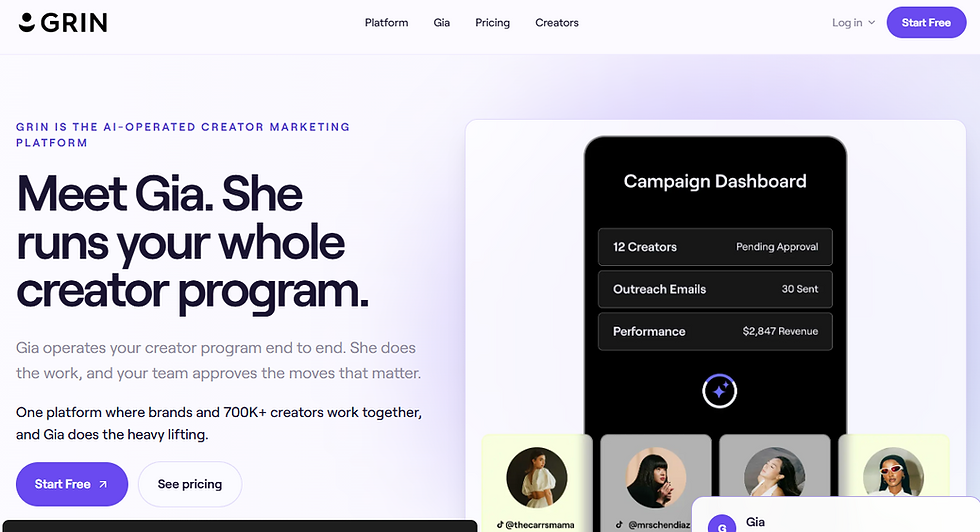
GRIN centers on creator relationship management and is a common choice for direct-to-consumer ecommerce brands running a large, ongoing roster. It keeps communication, product seeding, campaigns and results in a single hub.
With integrations across major ecommerce software plus payment and contract handling, it fits teams that treat creators as long-term partners rather than one-time placements. The emphasis is on managing relationships at volume.
Aspire
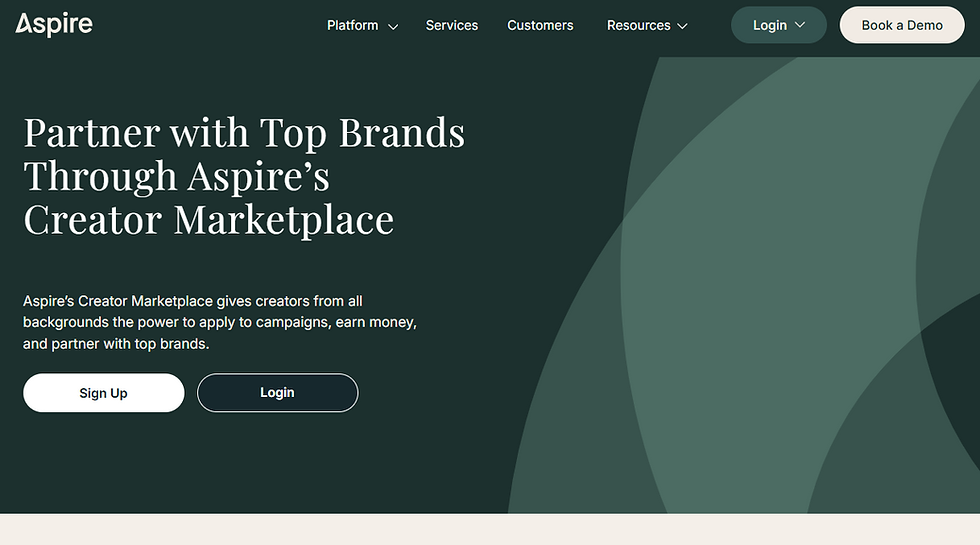
Aspire combines an opt-in creator marketplace with campaign management, so outreach starts warmer than cold discovery because creators have already raised their hand. It is popular with brands building ambassador communities and user-generated content programs.
It supports content licensing, which helps you turn creator posts into paid ads, and it integrates with Shopify. Teams that need to communicate influencer impact to stakeholders also use its Earned Media Value reporting as a dollar-based benchmark.

CreatorIQ
CreatorIQ is an enterprise platform aimed at large brands and agencies managing complex, multi-market programs. Its analytics and reporting are the main draw, alongside governance features and integrations across commerce, CRM and business intelligence systems.
That depth comes with more complexity and cost, so it is best suited to organizations with dedicated influencer teams and a long-term commitment to the channel rather than those just starting out.

Modash
Modash focuses on creator discovery and vetting, backed by a large database and filters that let you build a precise shortlist before reaching out. It also monitors whether the creators you hire actually publish what they agreed to.
Its campaign management is lighter than the end-to-end tools, so many teams pair it with a separate workflow system for bigger programs. If your main hurdle is simply finding and checking the right creators, it is an approachable option.

Traackr
Traackr is an enterprise tool built around measurement, governance and cross-market reporting. Larger organizations use it to standardize how influencer performance is tracked and compared across regions and teams.
Because it leans toward discovery and analytics, it is worth confirming how payments are handled if you need those inside the platform. It fits teams for whom rigorous, comparable data is the priority.
How to Match Software to Your Needs
Begin with the outcome you care about most, since that narrows the field quickly.
If provable sales are the goal, choose software that attributes revenue to each creator and plugs into your store. If your challenge is simply finding creators, a discovery-first tool will serve you better.
If you are an enterprise with strict reporting and governance needs, lean toward the analytics-heavy platforms. And if you are a small team, prioritize automation and AI so you can run more with fewer hands. It is also fine to combine tools, for example using one for discovery and another for management, as long as you avoid paying twice for the same capability.
Frequently Asked Questions
Is influencer marketing software worth it?
For most brands running more than a handful of creators, yes. Once you are managing outreach, shipping, tracking and payments across many partners, software replaces the spreadsheets and inboxes that break down at scale, and it gives you attribution you cannot get manually.
What should influencer marketing software include in 2026?
Look for a strong creator database, workflow automation, revenue attribution, built-in payments with compliance, integrations with your stack and an AI layer that speeds up discovery and outreach.
How is AI changing influencer marketing software?
AI is taking over the slowest manual steps. Tools like Upfluence use an AI co-pilot, Jaice, to recommend creators and draft outreach, which shortens campaign setup and lets smaller teams run larger programs.
Is software better than hiring an agency?
It depends on control and resources. Software gives you more control and lower ongoing cost if you have the time to run campaigns, while an agency offers hands-on expertise. Some platforms, including Upfluence, also offer agency support if you want both.
Can a small team use these tools?
Yes. Automation and AI features are specifically what let a small team manage programs that used to require a much larger one, which is why lean brands increasingly adopt this software early.
The Bottom Line
The right influencer marketing software is the one that matches how your team works and what you need to prove. Define your priority first, whether that is sales attribution, fast discovery or enterprise reporting, then shortlist the tools built for it.
For ecommerce brands and agencies that want discovery, management, attribution and payments in one AI-assisted system, Upfluence is a strong option to consider. Whichever you choose, let the software absorb the manual work so your team can focus on building the creator relationships that actually drive growth.
Sponsored Content Disclaimer
This article was contributed by a third-party business or promotional partner and is published on the Salesfully blog as part of a paid or collaborative content opportunity. The views, opinions, products, and services expressed are those of the contributing party and do not necessarily reflect the views of Salesfully. Publication does not constitute an endorsement, guarantee, or recommendation by Salesfully. Readers should conduct their own research before making business, financial, or purchasing decisions based on the information provided.


This list of 2026 influencer marketing software is perfect reference material for agency teams! I saved several comparison graphics from the article and used image splitter to create neat split panels for social media carousels. Any brand running creator campaigns will appreciate how this piece highlights key differentiators between all-in-one suites and lightweight tools.
Really enjoyed reading this guide covering the leading influencer marketing platforms for 2026. While working on marketing visuals, I also use batch edit images to adjust screenshots in bulk, and I sometimes pause to read game tips on slay the spire 2 wiki when I need a short break. The article honestly covers pros and cons, not just sales copy for each SaaS tool.
This roundup of top influencer marketing software in 2026 is incredibly helpful for marketers shopping for campaign tools. I pull lots of software UI screenshots for my marketing blog and use bulk image download plus bulk image crop to clean and frame those comparison images before publishing. It breaks down pricing tiers, creator discovery features and reporting functions so brands can pick the platform matching their campaign scale.
Sprunki feels fresh every time I play because the impressive music created by different characters makes Sprunki a vibrant and exciting musical playground.