.png)
Know Your Focus Style to Get More Sales Done Without Burning Out

Updated: May 20
How to Align Your Sales Work With Your Brain’s Natural Attention Rhythm for Better Outcomes

Just launched your new business and need resources to ace direct marketing at lower costs with higher ROI?
Check out Salesfully’s course, Mastering Sales Fundamentals for Long-Term Success, designed to help you attract new customers efficiently and affordably.
In the world of sales, the difference between a closed deal and a missed opportunity can sometimes be traced back to when you tackled the task—not just how you did it. Understanding your attention style—the unique way your brain sustains or shifts focus throughout the day—can help you structure your workload to match your mental rhythm. The result? Less frustration. More follow-through.
This isn’t about becoming more disciplined. It’s about becoming more tuned in to how your mind works. Inspired by Dr. Emily Anhalt’s work on focus and emotional fitness, this guide walks through how to use self-awareness to organize your day around your brain’s strengths—not in defiance of them.

Step 1: Pinpoint Your Natural Attention Style
Let’s begin with a quick self-assessment. Most people lean toward one of these three focus modes:
Selective Focus – You work best in short, uninterrupted bursts. Ideal for quick tasks like lead replies, prospecting, or checking in on client needs.
Sustained Focus – You thrive during deep work stretches. Proposal writing, pitch deck revisions, and market research suit you well.
Divided Focus – You’re surprisingly adept at jumping between tasks. Great for juggling emails, calls, and CRM updates.
A 2018 study published in Frontiers in Human Neuroscience found that individuals who are aware of their dominant focus style report higher job satisfaction and performance. Rather than fighting distractions, they structure their work to anticipate them.
Step 2: Assign the Right Tasks to the Right Time of Day
Studies show that our cognitive energy peaks and dips follow a predictable pattern. For most adults, peak mental performance happens in the mid-morning, while creative insight or administrative tolerance tends to rise in the early afternoon source: Harvard Business Review.
Here’s a basic structure you can modify:
Time Block | Ideal Tasks |
9:00–11:30 AM | Cold calling, strategic outreach, data crunching |
12:00–2:00 PM | CRM updates, inbox zero, client check-ins |
2:30–5:00 PM | Proposal writing, creative problem-solving |
This rhythm-based planning model aligns with chronobiology, the science of biological time. Researchers at The Sleep Foundation emphasize how tuning into your internal clock—not forcing productivity at all hours—can improve cognitive function and long-term focus.
Step 3: Create a Repeatable Routine That Works for You
Sales success is built on repetition—but burnout is built on repetition without rest or reward. Create a focus-matching schedule you can sustain.
Start with this simple template:
🧠 Morning Sprints = High-focus work
💬 Midday Admin = Moderate-focus maintenance
📝 Afternoon Deep Work = Creative or reflective tasks
😌 End-of-Day Wrap = Light review and tomorrow’s prep
Consider using time-blocking tools like Google Calendar's focus time, time-blocking tools like Akiflow that automatically pull tasks from email, CRM, and calendars into intelligent daily schedules, or productivity methods such as the Pomodoro Technique to support this structure.
Optional Exercises to Reinforce Focus Awareness
30-Day Energy Log: Each day, note your alertness every two hours. Patterns will emerge—use these to adjust your sales task timing.
Task Heat Map: Label your common tasks as high, medium, or low intensity. Now rearrange your schedule so the most intense tasks meet your sharpest mental windows.
Focus Retrospective: Each Friday, ask: “What tasks felt effortless? What dragged?” Adjust accordingly for the following week.
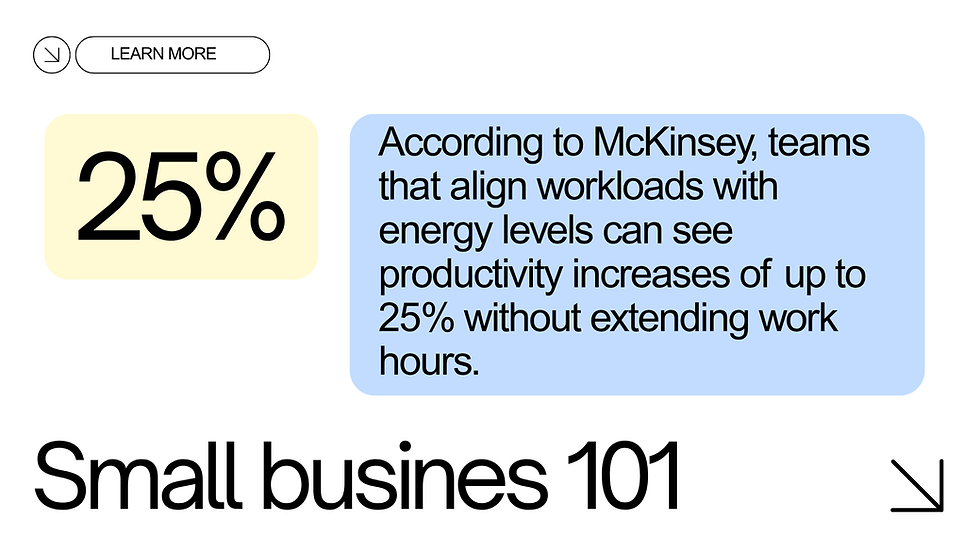
According to McKinsey, teams that align workloads with energy levels can see productivity increases of up to 25% without extending work hours.
Final Thought
Sales is not just about willpower—it’s about workflow fit. When you align your most important tasks with your most focused hours, you stop wasting energy trying to force results. You start working with yourself, not against yourself.
As psychologist Dr. Emily Anhalt puts it:
“Emotional fitness includes understanding your wiring—so you can work smarter, not just harder.”
Just launched your new business and need resources to ace direct marketing at lower costs with higher ROI?
Check out Salesfully’s course, Mastering Sales Fundamentals for Long-Term Success, designed to help you attract new customers efficiently and affordably.
Don't stop there! Create your free Salesfully account today and gain instant access to premium sales data and essential resources to fuel your startup journey.
Sponsored Content Disclaimer
This article was contributed by a third-party business or promotional partner and is published on the Salesfully blog as part of a paid or collaborative content opportunity. The views, opinions, products, and services expressed are those of the contributing party and do not necessarily reflect the views of Salesfully. Publication does not constitute an endorsement, guarantee, or recommendation by Salesfully. Readers should conduct their own research before making business, financial, or purchasing decisions based on the information provided.


Comments